

Life in Germany
Life in Germany as an apprentice: an honest picture
Small towns, winter, halal food, prayer, fasting during shift work and homesickness. These are the things agencies rarely talk about, and they decide more than anything else whether you feel at home.
 ProvenExpertTop service provider and top recommendation 2025
 Unternehmen der ZukunftAward from a German innovation institute
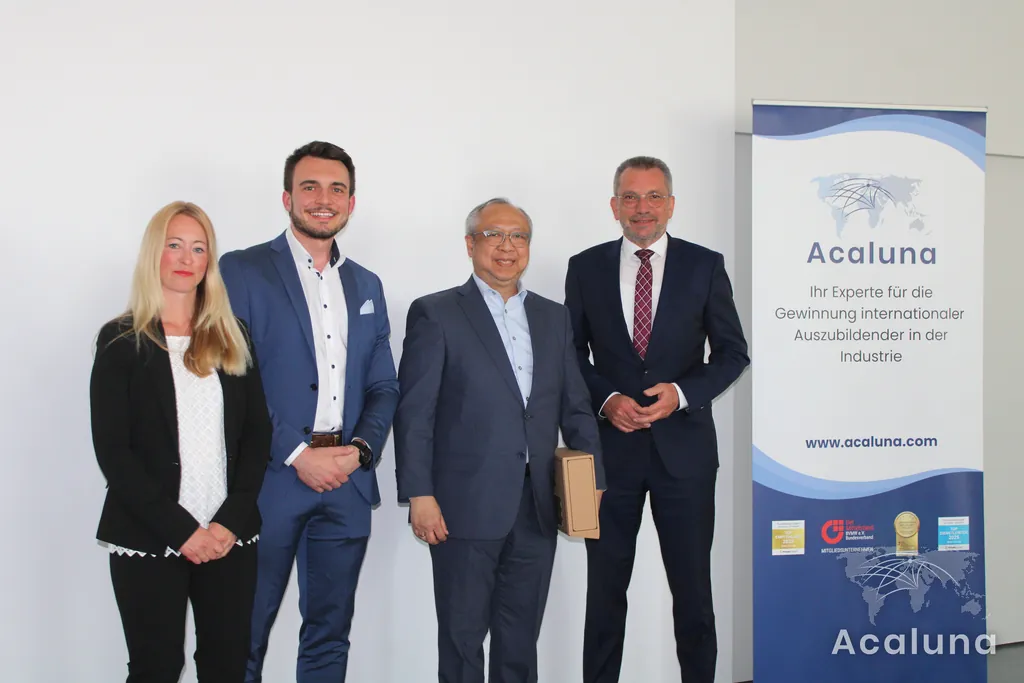 Indonesian Consul Generalvisited our office, 2025
Press
Schwäbische Zeitungreported on Acaluna, April 2025
HRB 746028
German companyregistered at Ulm District Court
Indonesian Consul Generalvisited our office, 2025
Press
Schwäbische Zeitungreported on Acaluna, April 2025
HRB 746028
German companyregistered at Ulm District Court
This page is based on what our apprentices from Indonesia tell us after their first months in Germany. Most of it applies to anyone who moves here for an Ausbildung.
Living in a small town
Most German industrial companies are not in Berlin or Munich but in small towns and rural areas. Life there is calmer, rents are lower and people have more time for you. You also learn German faster, because fewer people around you speak English.
The downside: shops close early, almost everything is closed on Sundays, and buses and trains do not always run often. Many of our apprentices use a bicycle and the Deutschlandticket, the national monthly ticket for local public transport.
Weather and winter
German winters are cold and dark. Temperatures are often around zero, sometimes below, and in December the sun sets at around half past four in the afternoon. For many apprentices from warmer countries, the first winter is the hardest time.
Our advice: buy a good winter jacket in Germany, where they suit the climate better than those sold at home, keep moving and do not shut yourself in. Summer is the opposite: the days are very long, and in June it stays light until about half past nine in the evening.

Halal food
Pork is very common in Germany, so get used to reading labels. Words to know: Schwein (pork), Gelatine (often made from pork) and Alkohol. Halal meat is usually available in Turkish or Arabic shops, which exist in many medium-sized towns. In very small towns you may have to go to the next town or order online. Rice and Asian spices are sold in Asian shops and larger supermarkets.
Company canteens usually offer a meat-free option. Many of our apprentices cook for themselves, which is also much cheaper.
Prayer, mosques and Ramadan
Many German towns have a mosque, and several larger cities have Muslim communities from different countries. In small towns, the nearest mosque can be some distance away.
If you want to pray during breaks, talk to your trainer early on. Many companies are open to this, but production schedules and safety rules still have to be followed.
Ramadan needs planning. When it falls in summer, the fast can last more than 17 hours because the days are so long. Working at a machine or in a hot room while fasting can be tough. Talk to the company beforehand, for example about shift schedules or break times. Your safety at work always comes first.
Wearing a headscarf is generally allowed. In food production there are strict hygiene rules, so hair must be covered with a special cap. How to combine this with a headscarf is best discussed with the company during the interview.

Housing
Most apprentices live in a room in a shared flat (WG) or in a small apartment. Some companies provide accommodation or help you find it, and we help our apprentices with the search too. Keep money aside for the rent deposit, which can be up to three months' basic rent.

German work culture
- Punctuality really matters. Arriving five minutes early is normal.
- People speak directly. Germans often say things plainly. That is not a sign of anger, it is simply how people communicate.
- Asking is good. If you do not understand something, ask. Nodding without understanding can be dangerous at work.
- Safety is taken very seriously. Follow every rule, even when it feels excessive.
Homesickness
Almost every apprentice feels it, usually in the first months, in winter and on important religious or family holidays. Video calls make staying in touch easy, but they do not replace people around you.
What helps most is contact with others. That is why we organise meetings for apprentices from all over Germany, such as our trip to Heidelberg, and connect apprentices with each other. You are not alone.

The first weeks
- Register your address at the town hall within two weeks of moving in
- Open a bank account for your training pay
- Register with a statutory health insurance fund
- Receive your tax ID, which arrives by post after you register your address
- Apply for your residence permit at the immigration office before your visa expires
We accompany our apprentices to these first appointments. More about the paperwork in our visa guide, and about money in the salary guide.

Status: September 2026. Everyone's experience is different. This is a general picture based on what our apprentices have told us.
How we write these guides: we check every legal statement against official German sources such as the Federal Foreign Office, the Federal Employment Agency, Make it in Germany and the Federal Institute for Vocational Education and Training (BIBB), and we add what we have learned from more than 320 apprenticeships we have organised. We do not accept payment for mentioning companies or services. This information is general and is not legal advice.
More guides
After the Ausbildung
Staying on, the job search permit, permanent residence and salary.
How to choose a recruitment agency
What agencies may charge, the warning signs and the questions to ask.
Apprentice stories and reviews
Videos, original reviews and photos from our apprentices in Germany.
Ausbildung in Germany: the complete guide
How the system works, who can apply from abroad and where most applicants go wrong.
Requirements and checklist
School certificate, German level, age, money and visa, with official sources.
Can you do an Ausbildung in English?
The honest answer, the rare exceptions and how long B1 really takes.
Is an Ausbildung in Germany realistic for you?
Seven questions, one minute, an honest answer: what you already have, what is still missing and whether we can place you. We are also preparing a step-by-step online course for applicants from every country.